


Lesbians and art
- Maria Cocu

- 17 sept 2020
- 3 min de lectura
Actualizado: 10 dic 2020
To celebrate feminism and the LGB (Lesbians, Gays, Bisexuals), let's learn about three of the most notorious lesbian painters. This entry is focused more on history rather than artistic value.
Birthe Havmoeller:
The term ‘lesbian artist’ meaning a ‘lesbian feminist artist’ was coined by the feminist movement of the 1970s. I use the term ‘lesbian artists’ as an umbrella term in this article, as a description of women artists who loved women and chose follow their desires and get involved in romantic relationships with women rather than following the (heteronormative) European norm: to get married. Greek poet Sappho’s association with erotic love between women dates to at least 1825 in writing in English, sparking the use of words like ‘sapphist’ and ‘sapphism’. The noun ‘lesbian’ was first recorded in the 1890 Billing’s Medical Dictionary. Around 1900 the terms ‘invert’, ’lesbian’, ‘homosexual’ and ‘homosexuality’ were to some extend interchangeable with ‘sapphist’ and ‘sapphism’. The ‘sapphists’ identified with Sappho (the Greek poet) i.e. they were leaders, members of an elite. The ‘lesbians’ were followers of the Sapphists, thus these terms describe the implicit class system of the homosexuals community of the time in Europe. All the women worked in some way or other to create their versions of woman-centered communities through salons, all woman dance groups, performance, personal networks, etc.
Rosa Bonheur
Animalist painter form XIX. Rosa was a french painter, famous for her love for both animals and her wife. She was a well known lesbian. In her adulthood and already fully famous, the author sadly declared that, since she used to wear pants for long walks with her dogs through the forest, in the town where she lived with relatives during her childhood and early adolescence, they insulted her when she passed by calling her tomboy. The sufferings that she had to live alone remained unspoken, keeping for her the sorrow of being rejected for not wearing long hair or adorning herself with ribbons and lace.


Louise Abbéma
She was recognized for her work at 18 when she painted a portrait of Sarah Bernhardt, her lifelong friend, and whom many consider her lover. Her style is conservative and shows nothing of the creative currents of her time, founders of modern art.
Portraits of famous contemporaries ensured the success of her career. Initially it mainly portrayed men and women members of the Comédie-Française in their costumes, such as Jeanne Samary and Barretta Blanche.
Abbéma was not only known as a painter, graphic artist and sculptor but was also an accomplished designer, as well as a writer who made regular contributions to magazines.


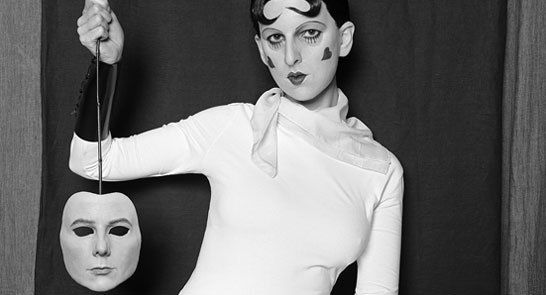
Claude Cahun
Around 1919, parisian artist and writer Lucy Renee Mathilde Schwob, age 25, became Claude Cahun.
Claude Cahun explored, questioned, discovered and built her own identity through the camera. Multifaceted artist, she wrote, acted in theater and took photographs. Affiliated with the surrealist movement, she turned her life into a rebellious, subversive artistic expression that faced the Nazi regime.
Lucie Schowb (Claude Cahun) was part of a bourgeois family.Her mother had a complex mental illness: she was interned several times in the asylum until she died.Lucie was also a cause for concern about her eccentricities, anorexia, and suicidal tendencies. Her maternal grandmother, Mathilde Cahun, took charge of the little girl's education. Around 1912 the girl took her first photographs.
Lucie was looking for a different name, a new identity. Thus, she flirted with names such as Claude Courlis, Daniel Douglas or simply Lucy Schwob. Finally in 1919 she decided on the pseudonym Claude Cahun. Claude is an androgynous name that works equally well for men and women in French.



Comentarios