


Art on the edge
- Maria Cocu

- 6 sept 2020
- 2 min de lectura
This entry is going to be about edges and frames. Not the types, but what they tell us. The edge is a common obliterated aspect, since color and composition strike the eye more quickly. And if you step outside of pictorial art, it is challenging to define the edges. Space, time or outside objects are key borders, among other things.

Integral frame
The earliest frames in the collection are integral or engaged frames, attached to the painting surface (Memling’s Virgin and Child, for example, is an integral frame).

These frames provide protection for the paintings, and also served as places for painters to rest their hands or wrists while working. In a religious context, frames can be didactic, directing our eyes in chained readings of separate panels. Frames tell us precious information about the painting. They show us aspects like character, value or purpose.
In
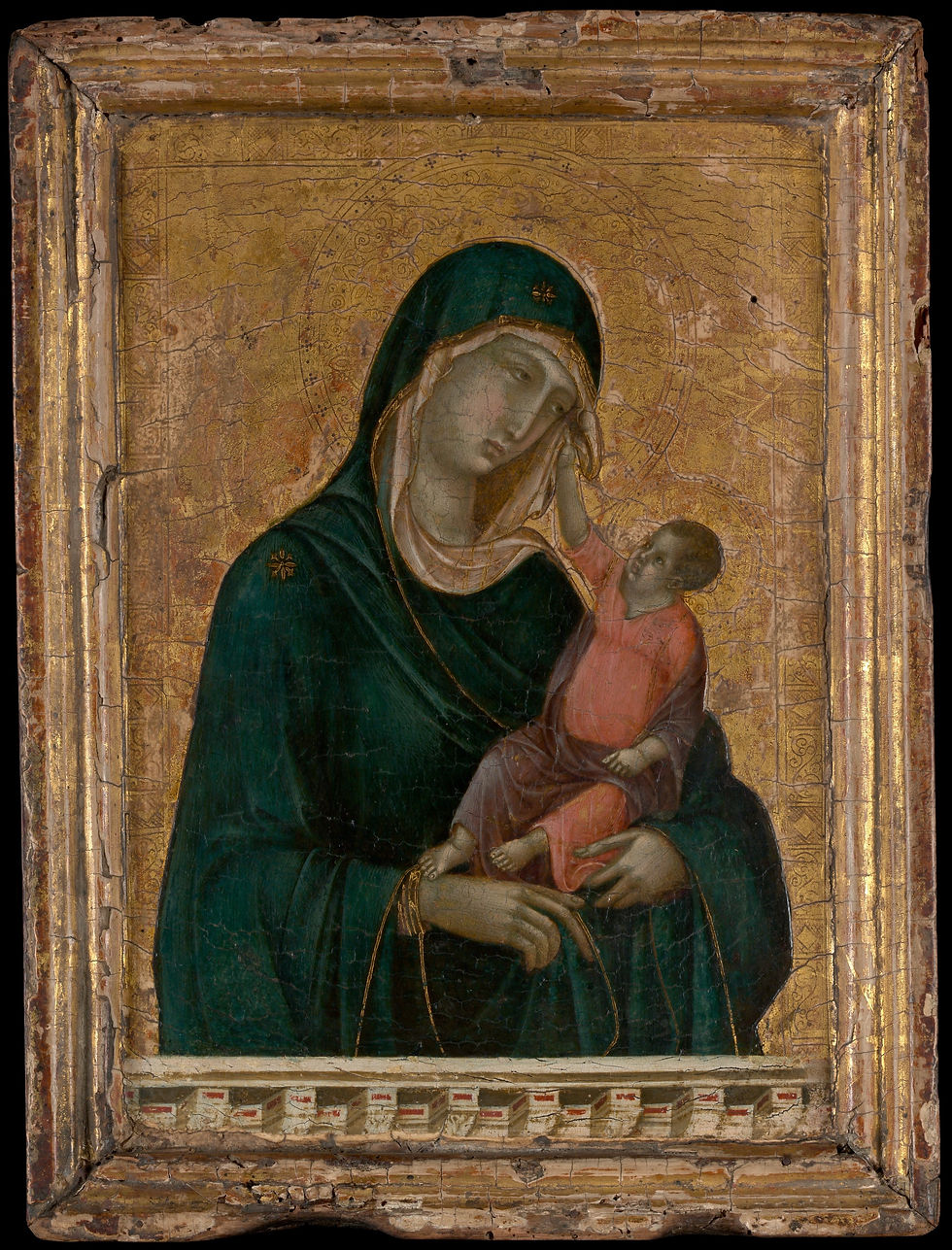
Madonna and Child” we can see indentations where the frame was burnt, by candles placed beneath the painting. Think of how many people looked deep and carefully into this painting, trying to connect with their God.
Though artists would not have made frames themselves, already in the seventeenth century painters were concerned with how frames affected viewing experience.
Poussin wrote in 1639:
...embellish [my painting] with a bit of frame, for it needs it, so that when it is viewed as a whole the eyes’ rays will be absorbed and not scattered around by receiving elements from the other neighbouring objects … it would be most appropriate for the…cornice to be simply gilded with a matt gold which blends gently with colours without offending them. (Nicolas Poussin, letter to Paul Fréart de Chantelou, April 28, 1639, in The Self-Aware Image, by Victor Stoichita)
Changes in architectural and interior design styles over the centuries led to new styles of frames. As a result, most paintings’ original frames were replaced; even if not original, however, many in the European Paintings collection are period frames (contemporary to the paintings).
Edges
In this half finished embroidery from the mid-17 century, edges revoke the history: we see all the pattern the artist planned to ornament with needlework, but couldn’t. It is a victim of the civil war, in a time of great political commotion.


But edges exist outside paintings too.

In this sculpture, a simple humane gesture breaks the solidness. One of the sleeping boys is sleeping very close to the table’s edge; his hand is under his cheek, as his hair escapes, falling out of the space of the table. The sculptor had to anticipate this gentle detail and leave an untouched piece of marble, before he even began to get in detaills.

Next time you observe an artwork, don't forget to spot the borders. It will enrich your experience and make you wonder.



Comentarios